


A quiet hum is normal, but a persistent racket is not. Learning how to reduce your refrigerator noise is essential for restoring peace to your kitchen and preventing potential appliance failure. That sudden buzzing, knocking, or rattling isn’t just an annoyance—it’s often your fridge’s way of signaling that something needs attention.
Excessive noise can stem from simple issues like an unbalanced unit or clogged coils, or point to more serious concerns with the compressor, evaporator fan, or defrost system. Before you consider an expensive service call or replacement, many solutions are surprisingly straightforward DIY fixes.


To achieve a more peaceful environment, begin by checking for any debris around the appliance. Opening and closing the doors frequently can lead to small items getting stuck. Remove any obstructions and ensure nothing is connected that could be causing annoying sounds like tapping or rattling.
If the noise persists, examine the leveling of your unit. It’s essential to reposition the appliance so it sits firmly on the floor. An adjusted stance prevents unnecessary vibrations that contribute to disturbance. Regularly monitor your refrigerator’s coils and clean them to maintain optimal function.
Occasionally, wear and tear can affect performance. If you notice persistent sounds, you might decide to pull the unit away from the wall to inspect the lines and coils for any signs of damage. Consult a qualified technician if you find anything that looks damaged or if you require additional support. Keeping a well-maintained appliance not only ensures efficiency but also enhances the overall convenience of your kitchen.
Addressing High-Pitched Whining in Your Refrigerator
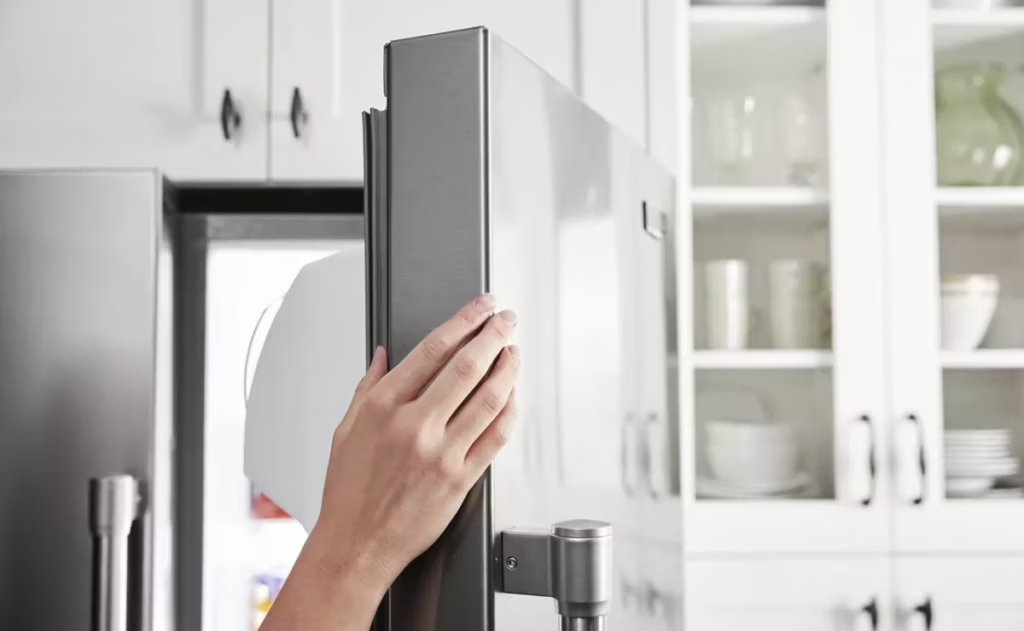
If you are having a high-pitched whining sound from your appliance, it’s crucial to address it promptly. Experts suggest that the first step is to check the level of the unit. An unbalanced fridge may indicate that certain components are straining, leading to annoying noises. Adjust the feet or use shims to ensure each corner is perfectly aligned.
Another aspect to consider is the internal fan and evaporator. Sometimes, debris or frost build-up can create a low-pitched or whining sound. Open the back cover and inspect these areas. If they’re blocked or dripping, clean them thoroughly to eliminate airflow issues. Consider using a product like Domex, which can help maintain cleanliness without harming the built-in components.
Paying attention to the brand of your appliance can also answer many questions. Some brands have systems that are prone to whining, which can be a design issue rather than a malfunction. If this is confirmed, it might be worth exploring warranty options or customer service assistance.
In the case where after several hours the whining persists, and you’ve already adjusted the level and cleaned the internals, it may be time to consult with a technician. Reaching out to service stations can provide additional insights. Always ask for expert opinions if you’re unsure about proceeding with any repairs yourself.
For additional maintenance, consider investing in a soundproofing kit or vibration pads available on sites like Amazon. These products can help in reducing noise levels and creating a more peaceful kitchen environment.
Identifying the Source of the Noise
Start by being informed about the common sources of sound in your refrigerator. Evaporator fans are usually the main culprits behind persistent noises. If you encounter tapping or rattling sounds, it could indicate that the fan is either obstructed or malfunctioning. Check the panel at the back to inspect if it’s leveled. An uneven appliance can create unnecessary vibrations.
If the noise seems to be more pronounced during specific hours, it might be related to the compressor operations. At elite speeds, compressors can be louder than usual when they’re working hard. Make sure your appliance is properly connected to a stable power source. A fluctuating supply can affect the performance of both the compressor and fan.
Consider solutions like installing noise-reducing pads under the appliance to reduce vibrations. Products such as EcoFlow sound-insulating mats are available to make your setup quieter. If you notice persistent noise after implementing these tips, it may be time to replace the evaporator or check for other issues linked to the sides and back of the unit.
Check for any loose parts; over time, screws and components can come free, causing additional noise. Addressing these issues promptly will ensure your refrigerator operates smoothly, aligning with your daily needs without disturbance.
For more severe issues beyond simple fixes, consult a professional. Dealing with complex problems late can lead to costly repairs. Products on Amazon, like replacement fans and compressor kits, can provide you with the necessary tools for a quieter kitchen.
Common Causes of High-Pitched Whining
First, it’s essential to check the compressor of the appliance. If it’s coming closer to the end of its life or having a strain, it can create a high-pitched sound. Scheduling regular maintenance can help identify these issues early. In cases where the noise persists, you ought to consult a professional.
Another frequent reason for this noise is loose components. Check for any loose screws or mounting brackets holding the dispenser or other parts. Even if you think everything is secure, it’s worth touching each area to ensure nothing rattles. If loose elements are the problem, tightening them often stops the whining immediately.
Sometimes, a buildup of ice in the fan can lead to complaints about sounds. This can result from inadequate airflow or the appliance being in a humid environment. Ensure the vents are clear and, if necessary, defrost the unit to remove any blockages. This process ought to be repeated regularly, especially in specific circumstances where moisture is high.
In addition, the fans themselves can be a source of noise. If they are not functioning properly or are touching other components, high-pitched whining can occur. Consider checking the blades for strain or obstruction–if the fan is strained, it may fail completely down the line. You might want to look into replacement options on sites like Amazon, where you can find a fan compatible with your model.
Finally, pay attention to whether the appliance is level. An uneven surface can lead to vibrations, which often translate into unwanted sounds. Use a level to check and adjust each corner, letting you achieve a more stable setup. Remember, less strain means chances of a quieter operation are higher.
Checking the Fan and Condenser Coils
Begin by inspecting the fan and condenser coils, as these are crucial parts in maintaining the efficiency of your cooling system. If the fan is malfunctioning, it can become a source of excess noise, disrupting the peace in your kitchen.
Look for dust and debris on the condenser coils; these can hinder performance. A good practice is regularly cleaning them to prevent overheating. If you notice significant buildup, removing it will contribute to the overall cooling and efficiency of the refrigerator.
- Use a portable vacuum or a brush specifically designed for this purpose.
- Ensure the fan blades are clear of obstacles and aligned properly.
- Check that the refrigerator is level; an unbalanced unit can cause additional noise.
If your unit is housed in a tight cabinet, it’s essential to keep space around it. Open the cabinet doors occasionally for better airflow. This small action can prolong the life of your refrigerator and lead to quieter operation.
Technicians often find that cooling issues can be attributed to a faulty fan or dirty coils. The fan’s role is vital in circulating air, so any malfunction in this part can lead to excessive noise and inefficient cooling. Alternatively, consider checking the heater near the evaporator; if it’s malfunctioning, this can also cause sound disturbances.
To conclude, regularly maintaining these components not only enhances the performance of your refrigerator but also ensures a serene environment. For effective cleaning, you might want to explore products such as the Domex Coil Cleaning Spray or similar items available on platforms like Amazon. Keeping every part in its right condition will lead to a quieter kitchen experience.
Adjusting the Refrigerator’s Level
Begin by checking the level of your appliance. Over time, uneven surfaces can cause issues, such as vibrations and noises while the motor operates. Use a level tool to confirm whether your unit sits straight. If it’s off, simply adjust the leveling legs – either raising or lowering them can work wonders.
In many cases, this action can significantly reduce disturbances. Leveling can alleviate underlying problems caused by improper alignment. Adjusting these legs close to the right height means ensuring that weight is evenly distributed across the base, which can prevent unnecessary malfunctions.
Some models have adjustable feet, while mini fridges may require you to remove the front panel to access the legs. If this is the case, check periodically to maintain a stable position. Regular maintenance ensures that the power components, including the compressor and solenoid, operate efficiently.
If adjusting the refrigerator doesn’t solve your issue, consulting an expert may be wise. They can provide insight into more intricate problems. Many requests for repairs can be avoided with simple checks and adjustments before reaching out for professional help.
In conclusion, keeping your unit balanced is crucial in reducing sound levels while running. Depending on the model and date of manufacture, adjustments can mean the difference between a peaceful kitchen and constant noise. Remember, proper positioning can maximize the efficiency of your appliance and extend its lifespan.
Replacing Worn Out Parts
If you notice excessive noise coming from your appliance, it might be due to worn-out parts, particularly the evaporator fan. Most models have this component, which helps circulate cool air throughout the unit. If it’s malfunctioning, you may need to unplug the unit and replace the fan to resolve the issue effectively.
Before starting the replacement, you ought to know about the specific type of fan required for your brand. Checking the model number ensures you get the right part. You can find compatible options, such as the Whirlpool Refrigerator Evaporator Fan Motor, on sites like Amazon. This type of part typically reduces noise by ensuring proper air flow, making your kitchen more comfortable.
Additionally, be aware of other parts that may cause noise. For instance, debris or ice build-up around the compressor can affect its cycle and lead to unwanted sounds. Cleaning shelves and the area around the appliance early, before any major issues arise, can help prevent further problems. If you’re unsure, it might be a good idea to call a repair professional who knows everything about identifying these issues.
Replacing worn-out parts can significantly decrease noise and improve performance. For instance, installing a new compressor or fan not only resolves the presence of annoying sounds but also prolongs the lifespan of your unit. For additional efficiency, consider investing in vibration-reducing pads to further minimize any remaining disturbances. With the right steps, you can enjoy a quieter space while your refrigerator operates at its best.
Q&A:
What are some common causes of a noisy refrigerator?
Common causes of a noisy refrigerator include a malfunctioning compressor, loose components, or issues with the condenser fan. The compressor can produce a variety of sounds, and if it’s failing, it may be louder than usual. Loose parts can vibrate and create noise, while a dirty or obstructed condenser fan can produce a loud whirring sound. Checking these components can help identify the source of the noise.
How can I reduce the noise from my refrigerator without calling a technician?
To reduce noise from your refrigerator, first check for any loose parts and tighten them if necessary. Ensure the refrigerator is level, as an unbalanced appliance can cause rattling. Cleaning the condenser coils regularly can also help maintain efficient operation and reduce noise. If the fan is the issue, you can clean any debris around it to help minimize sound. If these steps don’t work, it may be time to consult a professional.
Are there any specific maintenance tips to keep my refrigerator quiet?
Regular maintenance can keep your refrigerator running smoothly and quietly. Clean the condenser coils every six months to a year, as dirt buildup can cause the appliance to work harder and produce more noise. Maintaining an appropriate temperature setting helps the compressor function efficiently. Ensure the door seals are intact, as poor sealing can lead to increased noise levels. Lastly, avoid overloading the refrigerator, which can stress components and create unwanted sounds.
What should I do if my refrigerator makes a continuous humming sound?
A continuous humming sound from your refrigerator usually indicates that the compressor is operating normally. However, if it seems louder than before, check if the appliance is level and if there are any objects nearby causing vibrations. If the humming persists and is bothersome, it might be a sign of a failing compressor, which should be evaluated by a technician to prevent further issues.



Good product quality. Works perfectly. Very good product to stop vibration of the washing machine
It works great. This worked and stopped my washer from moving. Quality was good my washer is quiet again.
Most important to know? THEY WORK. Our floor was so uneven and we could not quite get the support legs extended/shortened to get the washer completely in level. So we thought we would try these. WOW! It was fantastic and the washer has not move at all even when the load gets a little off balance. We have been putting up with this washer for three years, but these Vibration pads were the answer.