


Are you unknowingly compromising your food’s safety and freshness? The simple act of setting your appliance’s dial can be the difference between perfectly preserved meals and wasted groceries. Understanding the optimal refrigerator and freezer temperatures is not just about saving energy—it’s a critical step in preventing foodborne illness and maximizing the shelf life of your food. This guide will give you the clear, science-backed numbers you need to ensure your fridge and freezer are working for you, not against you.


To maintain freshness and minimize unnecessary expenses, ensure refrigerator settings range from 37°F (2.7°C) to 40°F (4.4°C), while freezers should operate at 0°F (-18°C). These limits help avoid the risk of illness caused by bacteria thriving in inconsistent environments.
An understanding of what constitutes proper humidity levels plays a significant role in preserving different food types. For example, dairy products benefit from slightly higher moisture, whereas raw meats require a cooler, drier setting. In addition, it’s crucial to hang gaskets securely, as a clean and well-sealed fridge can efficiently manage temperature and humidity.
Regular checking of appliance performance is vital for sustainable food storage. Factors beyond just the settings, such as cleaning routines and even the types of containers used, can impact overall effectiveness. Knowing that ingredients stored correctly can exist without crossing into danger zones makes monitoring an essential undertaking for anyone who believes in the value of fresh produce.
Ultimately, beginning with the right information on maintaining the ideal temperatures in your kitchen appliances will answer many of your queries. This knowledge can help ensure items last longer and remain enjoyable, keeping your meals delightful and reducing waste in the process.
Optimal Temperature Settings for Refrigerators and Freezers
For most households, temperatures between 34°F and 38°F work best for chilling perishables. Dairy products, such as milk, thrive at around 36°F. Temperatures above this range can lead to spoilage, while too low may freeze certain items, compromising texture. Regularly checking these settings is essential, as alarms may alert you to any deviations.
In the freezer, maintaining a temperature of 0°F keeps your food safe and preserves quality for extended periods. High-fat items, including meats, may need a minor adjustment in storage due to their fat content. For long-term storage, consider vacuum sealing to avoid freezer burn. Remember, consistency is key; fluctuations between high and low temperatures can cause harm to the components within.
Humidity also plays a role; environments that are too humid can lead to frost buildup. That’s why it’s advisable to keep the door closed as much as possible and check seals regularly. Everyone can benefit from these simple adjustments to improve efficiency. Popular options on sites like Amazon can help monitor temperatures accurately.
Belief in the old adage “colder is better” is not necessarily true. Over-chilling can yield negative results. Instead, explore the balance between safety and freshness. Regular adjustments based on specific needs, such as the type of food stored or frequency of access, can greatly enhance efficiency. Trust these guidelines behind every successful kitchen, creating an optimal environment for all your culinary needs.
Recommended Temperature Range for Refrigerators
For proper storage, aim for a temperature between 35°F (1.6°C) and 38°F (3.3°C). This range is specifically designed to keep your perishables fresh without freezing them. According to research findings, the warmest area within your appliance usually exists near the door, while the coldest part is typically at the back wall. This means that items stored in the door may start to spoil sooner than those kept deeper inside.
Here’s a practical tip: when organizing, place things like milk and eggs in the coldest sections instead of the door. To improve overall cooling, ensure that vents are clear and can effectively circulate air throughout. Respondents in a recent survey also highlighted that adjusting the temperature slightly can make a significant difference in food quality. Older models might require more attention, as they can struggle to maintain a consistent climate.
As a benchmark, a standard temperature of 37°F (2.8°C) is often recommended by many teams in the industry. It can help preserve a wide array of items, from vegetables to leftovers. For reference, consider products like the LG 21 Cu. Ft. Top Freezer Refrigerator or the Samsung 28 Cu. Ft. Side-by-Side Refrigerator, both available on Amazon. They have features that help maintain that optimal range efficiently.
When adjusting temperature controls, take note of your specific environment. Factors like climate, humidity, or how often the door is opened can affect performance. Whether for a family of four or just for yourself, finding the right balance can significantly affect your food experience. Make sure your appliance is working efficiently, and adjust as needed to keep your items safe and delicious!
Freezer Temperature Guidelines for Quality Preservation
For optimal quality preservation, keep your fridgefreezer at a level of 0°F (-18°C). This mark ensures items stay frozen and maintains their texture and flavor. Regular thermometers, available on sites like Amazon, lets you easily monitor the reading. Consider investing in a built-in model that integrates seamlessly into your kitchen for continuous monitoring.
Research corroborated by a recent study in England suggests that food quality can significantly decrease when temperatures rise above this point. An increased level in warmth can lead to freezer burn and the degradation of essential nutrients in your stored items. Routinely check the temperature, especially during hot weather or if your unit is placed outside where temperatures fluctuate.
Reports indicate that the best thermometers can make a notable difference in keeping track of temperature changes. Many reputable brands offer reliable choices for both traditional and wireless options. Some other Amazon items worth looking at include the GDEALER Food Thermometer and the Taylor Precision Products Digital Thermometer, which provide quick readings to ensure your freezer operates at the right level for quality preservation.
Consequences of Incorrect Temperature Settings
Incorrect temperature settings in cooling units can lead to severe consequences. Ideally, temperatures should be consistently between 32°F and 40°F for refrigerated items and 0°F for frozen goods. When the dials are not set correctly, harmful bacteria can thrive, increasing the risk of foodborne illnesses. For example, milk stored above 40°F can spoil quickly and become unsafe to consume.
Understanding the effects of improper temperatures is crucial. Several studies indicate that items like meat and dairy can deteriorate rapidly, related directly to temperature fluctuations. This further highlights the importance of regularly checking settings to prevent such a crisis. A good strategy involves using checklists to ensure each unit remains at the desired level, thus minimizing the risk of spoilage.
After identifying an issue with temperature settings, it’s essential to take immediate steps. Establishing a routine to monitor your cooling devices can prevent minor issues from escalating into major problems. Beliefs about how long products remain safe can vary; however, knowledge about expiration dates and proper storage greatly impacts the longevity of food items. Items such as frozen vegetables and pre-packaged meals maintain their quality best at consistent freezing temperatures.
In view of all this, investing in reliable thermometers can help alleviate concerns. For instance, the Thermopro TP50 Digital Hygrometer from Amazon provides an easy way to monitor temperature and humidity levels. With the right tools and understanding, anyone can manage their food storage effectively and reduce the chances of spoilage and illness.
Adjusting Temperature Based on Food Types
Meat products should be stored at 28°F to 32°F (-2°C to 0°C) to avoid spoilage. If you keep them at a higher temperature, that can lead to bacterial growth. Using storage bags designed for meats can help keep them fresh for longer. This ensures you don’t burn your steak during cooking or reach an expiration date too soon.
Dairy, like milk and cheese, benefits from slightly higher settings at 34°F to 38°F (1°C to 3°C). Keeping these items within this temperature range lets you enjoy your meals without worrying about spoilage. Observations show that consistently managing these variables can lead to more enjoyable cooking experiences.
Fruits and vegetables have different needs; 35°F to 40°F (1.5°C to 4°C) is typically ideal. Something to remember here is that certain fruits emit ethylene gas, which can affect nearby vegetables. Storing them in separate bags can minimize these effects. Troubleshooting any spoilage can often be linked to improper temperature settings.
Ready-to-eat items like leftovers should be at 40°F (4°C) or below. Keeping those meals at the right temperature is essential. If they sit outside their optimal zone for too long, it only takes a few minutes for bacteria to develop.
Adjusting temperatures based on food types is essential for maximizing freshness and safety. With the right strategies, you can create an environment in your coolers that supports healthy eating. For instance, consider buying specialized thermometers from Amazon, like the ThermoPro TP03A, to help you monitor these changes accurately.
Using Thermometers for Accurate Temperature Monitoring
For optimal safety and freshness in your kitchen, using thermometers is essential. Place a thermometer in your fridge or freezer to monitor temperatures accurately. Keep your fridge at 37°F (3°C) and your freezer at 0°F (-18°C). A simple yet effective guide for finding the right settings ensures food stays fresh.
A thermometer that displays both Fahrenheit and Celsius can be particularly useful. One popular model is the ThermoPro TP50, which shows precise readings for both fridge and freezer. Consider one with a large display for easy visibility, even from a distance.
Monitor temperatures regularly, adjusting whenever necessary. If your readings are warmer than recommended, food may spoil faster. Ensuring accuracy can make a major difference in food quality and safety. A well-calibrated thermometer works effectively in preventing unpleasant surprises.
Leaving food out too long can lead to unwanted bacteria growth. Always return items to their respective fridges/freezers right away. Items like the Inkbird IBT-4XS, which runs on Bluetooth, allows you to check temperatures conveniently from your phone. This contextual feature lets you monitor conditions without any hassle.
The history of thermometers goes back centuries, but modern advancements make them even more reliable. The majority of today’s models come with additional features, such as alerts when temperatures rise above safe levels. These alerts can help you stay ahead in safeguarding your food.
In conclusion, utilizing thermometers ensures a safe kitchen environment while keeping your food fresh. Regular checks and adjustments are the keys to optimal performance, so invest in a quality thermometer that meets your needs.
Tips for Maintaining Consistent Temperatures
Position thermometers at the center of both compartments–one at the top and another at the bottom. This helps to monitor temperatures accurately, ensuring they remain within the safe zones. Respondents from a recent survey showed that a significant number acted on this advice, and their food freshness improved dramatically. Published data confirms that proper placement directly influences temperature consistency.

After each door opening, wait for the display to stabilize before checking temperatures. This practice prevents unnecessary fluctuations. It’s also beneficial to keep items together in the center, avoiding empty spaces that lead to uneven cooling. Consider using containers that allow for airflow to promote even cooling around the food. Some users have found that organizing items from back to front or on numbered shelves helps keep track of what’s been added or removed.
Regularly monitoring these settings is crucial. A digital thermometer that records minimum and maximum temperatures can be a great option. Many users have been discouraged when not closely checking their devices regularly, which can lead to bacteria growth and potential illness. Here’s a pro tip: Never place warm food directly inside. Allow it to cool to room temperature first to maintain optimum conditions.
If you’re looking to enhance your monitoring setup, consider products like the “Inkbird IBS-TH1 Wireless Thermometer” or the “GDEALER Digital Thermometer.” Both options are available on Amazon.com and facilitate easy tracking of temperatures, making your maintenance efforts efficient.
Improving Awareness of Correct Fridge Temperature
Maintaining an appropriate level in your cooling unit is crucial for protecting meals from spoilage. National surveys have shown that less than 25% of households in England have thermometers installed to verify their unit’s settings. This gap in awareness can lead to improper temperature management and subsequent food waste.

To combat this issue, consider adjusting your unit to stay within the recommended range of 32°F to 40°F (0°C to 4°C). This range effectively prevents unwanted bacterial growth while also maintaining the perfect texture for fruits and vegetables. For instance, if you routinely find that your produce is spoiling faster than expected, it may be due to temperatures that are too high.
Using electronic thermometers is a simple means of ensuring your cooling unit operates correctly. You can find options like the Taylor Digital Refrigerator Thermometer on Amazon, which allows for easy monitoring. Although some believe that these devices are unnecessary, they can serve as reliable tools in preventing unexpected spoilage.
Cleaning out dust or debris from coils and other components can also improve efficiency. A dusty appliance forces the unit to work harder, possibly causing temperature fluctuations that could put your food at risk. Regular maintenance, at least once a month, does wonders for performance.
Furthermore, a published report indicates that individuals who regularly test their settings are less likely to experience meal spoilage. Simple practices, like checking temperature daily, form important habits. Consequently, food remains fresher longer, allowing for more meal preparation flexibility and minimal waste.
In any case, acting based on awareness of proper temperature ranges does not require excessive time or resources. Just a few steps can significantly increase the shelf life of groceries while ensuring that every meal reaches its best potential. For those interested in even more convenience, consider shopping online; stores like Amazon also offer various family-friendly items through PayPal.
Embracing this knowledge should lead to better food preservation, encouraging a healthier lifestyle while ultimately saving you money.
Q&A:
What is the ideal refrigerator temperature for food safety?
The ideal temperature for a refrigerator to ensure food safety is at or below 40°F (4°C). Keeping the fridge at this temperature slows down the growth of bacteria that can cause foodborne illnesses. It’s recommended to regularly check the temperature with an appliance thermometer, as the internal temperature can vary based on the fridge’s usage and design.
How do I know if my freezer is at the correct temperature?
The correct temperature for a freezer should be 0°F (-18°C) or lower. This temperature effectively preserves food quality and inhibits bacterial growth. You can verify the freezer’s temperature with a thermometer specifically designed for that purpose. Regularly checking the temperature helps ensure that your frozen items maintain their freshness and safety for consumption.
What happens if my refrigerator temperature rises above the recommended levels?
If your refrigerator temperature rises above 40°F (4°C), there is an increased risk of bacterial growth on perishable food items. Foods like dairy, meat, and eggs may spoil quicker, leading to food waste and potential health risks. It is advisable to immediately check the temperature and adjust the settings. If the temperature remains high for more than two hours, perishable foods should be discarded to ensure your safety.
Can I set my refrigerator temperature colder than 32°F (0°C) for better preservation?
Setting your refrigerator temperature below 32°F (0°C) can cause food to freeze, which is not recommended for most items. While freezing can preserve food, it can also alter texture and flavor, especially for fruits and vegetables. The goal is to keep the fridge cold enough to slow down spoilage while preventing any freezing. Therefore, the temperature should ideally remain above freezing but at or below 40°F (4°C) for optimal food safety and quality.


For hunting these work perfectly. Wish I would have started using these years ago when processing my own wild game. They are high quality and I appreciate the labels on the bag that are ready to be filled in.
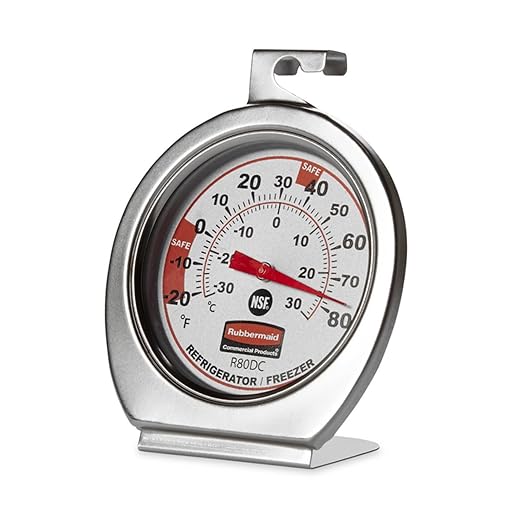
A must have for every house hold to keep an eye on your Fridge status. Seems like our fridge slowly conks out once every 4 years. But as the compressor starts to fail the temperature slowly drops but you are not aware of it until you start to see your frozen meat not so frozen anymore and gives you very little time to call the technician etc before your entire contents of the fridge has to be thrown away.Recently this happened to us and I decided to get a pair of thermometer to keep an objective eye on the freezer status. I like the fact that this is analog so no need to worry about battery dying out etc. When the compressor was going bad, the freezer temperature was about -2 deg C and once we got it fixed now it is about -18 deg C. So now I know that as the temperature starts to get warmer, something is about to happen and I can prepare ahead of time.Anyway, it is a practical thing to have one in the freezer and one in the fridge to keep an eye on the Fridge status.
Great product for the price, effective. I recently purchased the 2 Pack Refrigerator Thermometer, 30-30°C/20-80°F, Classic Fridge Thermometer with a Large Dial and Red Indicator, and I am thoroughly impressed with its performance.Firstly, the large dial design makes it incredibly easy to read the temperature at a glance, even from a distance. The red indicator is highly visible and provides clear, precise readings, which is essential for monitoring optimal fridge and freezer conditions.Installation was a breeze—no tools required. I simply placed one in my refrigerator and the other in the freezer. The thermometer quickly adjusted and began providing accurate readings. The temperature range of 30-30°C/20-80°F is perfect for ensuring food safety, and the durable construction gives me confidence in its longevity.What I appreciate most is the peace of mind it offers, knowing my perishables are stored at safe temperatures. Whether you’re monitoring a fridge, freezer, or cooler, this thermometer delivers reliable performance.Highly recommend for anyone looking to keep their food fresh and safe!
price. great quality and price
Reliable, Easy to Read, and Surprisingly Handy. I bought this 4-pack of refrigerator thermometers to monitor temps in our fridge, freezer, and garage fridge—and I’m genuinely impressed. Each thermometer is compact but easy to read, with clear markings and a sturdy build. I love that they don’t require batteries and give instant feedback. Within a day, I discovered one of our fridge compartments was running too warm—problem solved before any food spoiled!Having four in the pack is perfect for full coverage, and they’re simple enough for anyone to use. If you care about food safety or just want peace of mind, this little set is a must-have.Highly recommend for any household, especially if you’ve got multiple cooling units or store sensitive items like breast milk, medications, or fresh produce.
Good item, and very accurate. I found these to be very accurate. I have a Bosch refrigerator and you can set the temperature but it doesn’t have a readout of the actual temperature. I got these even though some reviews said they were inaccurate. They do take some time for them to settle down and provide the correct temperature. I placed one in the refrigerator and the other in the freezer and checked them in a few hours and both were within 0.2 degrees of the set temperature. I also had another thermometer that I checked them against and it was within 1 degree. I notice that during the day with people opening and closing the door that the reading was sometimes up a couple of degrees, both for the refrigerator and the freezer, but by the morning it was right at the set temperature within a fraction of a degree. Also you can see the range of temperatures reached over time. You can either hang these if there is something to hang them from, or just pop out the little stand and set them on a shelf. There’s a light if you need it that will go off after a few seconds. Overall very happy with these, at least so far. Good value for the money.
Peace of mind for breast milk stash. You can’t even make this up: I got this installed — super easy set up btw, though I imagine elderly folks in my life might need a bit of assistance for the app portion — and no joke, the power went out that night. So we got to test it immediately, and it worked! It alerted my phone and the beeper on the actual device went off. The temperature was so sensitive that I actually increased the temperature at which it alarms. That being said, you can also select a setting that makes it take some time to alert so it doesn’t alarm every time you open it or something.I definitely wanted the phone compatibility to get alerts if I’m away. It did send me a notification when the power was out, so I’m pleased with the wireless connectivity and range, and I could slightly hear it inside my house even thought freezer is in the garage. The sound is loud enough but not piercing.It felt high quality and looks nice. I got two, and used the second one on my fridge since we sometimes have fresh pumped milk in there and we had a couple times where the door didn’t close all the way. It matches my freezer and looks nice, but doesn’t match my fridge and I still don’t think it looks bad.The read speed is good, and I love being able to see the temperature data over time in the charts that the app provides.
Seems reasonably accurate. Reliable so far. Hi/Lo temp display “Clear” button sometimes acts weird but eventually resets. If the hanger hook was reversed it would be more useful for hanging but works fine as a support stand on a solid shelf.
Great as expected. Worked as expected! Very similar to the LEM bags; only difference is there is not a 1 lb line but can be easily figured out! Will definitely buy this product again!
Perfect budget-friendly solution for garage freezers. I wanted a stand-up freezer for my garage to store extra meat, and I was looking at the smart models that notify you if the temperature rises — but those cost a few hundred dollars more. Instead, I found this GoveeLife WiFi Refrigerator Thermometer with Alarm, and it does exactly the same thing for a fraction of the price.It tracks the temperature accurately and sends alerts to my phone if it goes above or below the limits I set in the app. The Govee app itself works great — I already use it for other products, and it’s super easy to manage everything in one place.Overall, this little device gives me peace of mind without spending a ton of money. Highly recommend it for anyone with a garage fridge or freezer.
Helpful for monitoring temps for breastmilk fridge. I purchased these to monitor two locations we store breastmilk for our newborn. One is our main freezer and another is a mini fridge. Compared with a pricier thermoworks probe, these seem to be within a 1-2 F error though the operating ranges of these fridge probes and a cooking probe are limited so if you are serious about calibrating, you probably need a professional grade product. I have used this with and without the wifi gateway and it works perfectly fine either way. The alarm function is user set and helpful for making sure we are aware if either fridge is malfunctioning. I can confirm it works as we placed warm water near the sensor in the fridge and within a minute it went off due to the ambient temperature change. Do note the alarm can only be disabled in person and not remotely so it should be disabled if you go on a trip.
Great thermometers for the refrigerator or freezer. Great refrigerator thermometers!The temperature is very accurate between the two. I took them out of the box and installed the batteries and the numbers were very close. I installed them in each of my refrigerators to monitor the temperature after fan replacement. Love the idea of seeing the minimum and maximum temperature that has swung inside the refrigerator. That was the major selling point for me because a gauge would not do that. A big plus was the touch to make the back light turn orange. I didn’t think I would really need it but it is convenient.